 Skip to content
South African Firms Face R17 Million Ransomware Recovery Costs as Attacks Worsen

Ransomware continues to create serious financial and operational pressure for South African organisations.
According to an article published by The Citizen, nearly two-thirds of ransomware attacks against South African organisations resulted in data encryption over the past year. The article reports that the average recovery cost exceeded R17 million, excluding ransom payments.
While ransom demands may have decreased, the impact of ransomware remains significant. Recovery can involve downtime, system restoration, device repairs, staff costs and lost business opportunities.
For South African businesses, this is a clear reminder that ransomware is not only a technical problem. It is a business continuity risk.
The Real Cost Goes Beyond the Ransom
Many organisations focus on the ransom amount when discussing ransomware.
But the true cost of an attack is often much bigger.
When systems are encrypted or disrupted, the business may lose access to critical files, customer information, financial systems, operational tools and communication platforms.
Even if the business refuses to pay the ransom, it may still face major recovery costs.
Teams need to restore systems, rebuild devices, investigate the incident, recover data, manage customer concerns and reduce further exposure. In some cases, business operations may slow down or stop completely.
This is why ransomware preparedness is so important.
Compromised Credentials Remain a Major Weakness
The report also highlights the link between ransomware and identity-based attacks, with many organisations saying their ransomware incident was also their most significant identity attack of the year.
This is important because modern cyberattacks often begin with access.
If attackers can gain control of a user account, they may be able to move through the business, access systems, steal information or prepare for a larger attack.
That is why stronger identity controls, multi-factor authentication, privileged access management and proper user access reviews are critical.
Businesses need to know who has access, what they can access and whether that access is still appropriate.
Identity and Access Controls Matter
The report also highlights the link between ransomware and identity-based attacks, with many organisations saying their ransomware incident was also their most significant identity attack of the year.
This is important because modern cyberattacks often begin with access.
If attackers can gain control of a user account, they may be able to move through the business, access systems, steal information or prepare for a larger attack.
That is why stronger identity controls, multi-factor authentication, privileged access management and proper user access reviews are critical.
Businesses need to know who has access, what they can access and whether that access is still appropriate.
Why Recovery Planning Cannot Be Ignored
The article reports that almost all businesses whose data was encrypted were able to recover it, and backup usage increased. However, recovery remains slow, with only 40% of South African organisations recovering within a week.
This shows that having backups is important, but it is not enough on its own.
Backups need to be tested.
Recovery plans need to be clear.
Critical systems need to be prioritised.
Roles and responsibilities need to be understood before an incident happens.
A business that can recover quickly is in a much stronger position than one that only starts planning during a crisis.
How 2TS Can Help
2TS helps organisations improve cyber risk visibility, compliance readiness and security posture before weaknesses are tested.
According to the 2TS website, their Free Cyber Risk Score helps businesses gain a clearer view of their cyber risk exposure, compliance gaps, what is covered versus what is missing, and what would need to be proven in an audit.
This is especially relevant in the context of ransomware, where incidents often begin with known weaknesses such as compromised credentials, exposed systems, unpatched vulnerabilities or gaps in protection.
2TS also offers solutions and services across areas such as endpoint management and security, NGAV and EDR, mobile device management, identity and access, data security, vulnerability remediation, security awareness and managed services.
These capabilities can help businesses move away from reactive security and toward a more proactive approach to identifying, prioritising and reducing risk.
Ransomware Readiness Starts Before the Attack
Ransomware recovery can cost millions, even before ransom payments are considered.
The best time to reduce that risk is before an attack happens.
Businesses need visibility over their users, devices, systems, vulnerabilities, backups and access controls. They also need to understand which gaps could create the biggest business impact if exploited.
Cybersecurity is no longer only about preventing attacks. It is about reducing exposure, preparing for disruption and protecting the ability to recover
Recent Posts
-
 South African Firms Face R17 Million Ransomware Recovery Costs as Attacks Worsen06 Oct 2026
 -
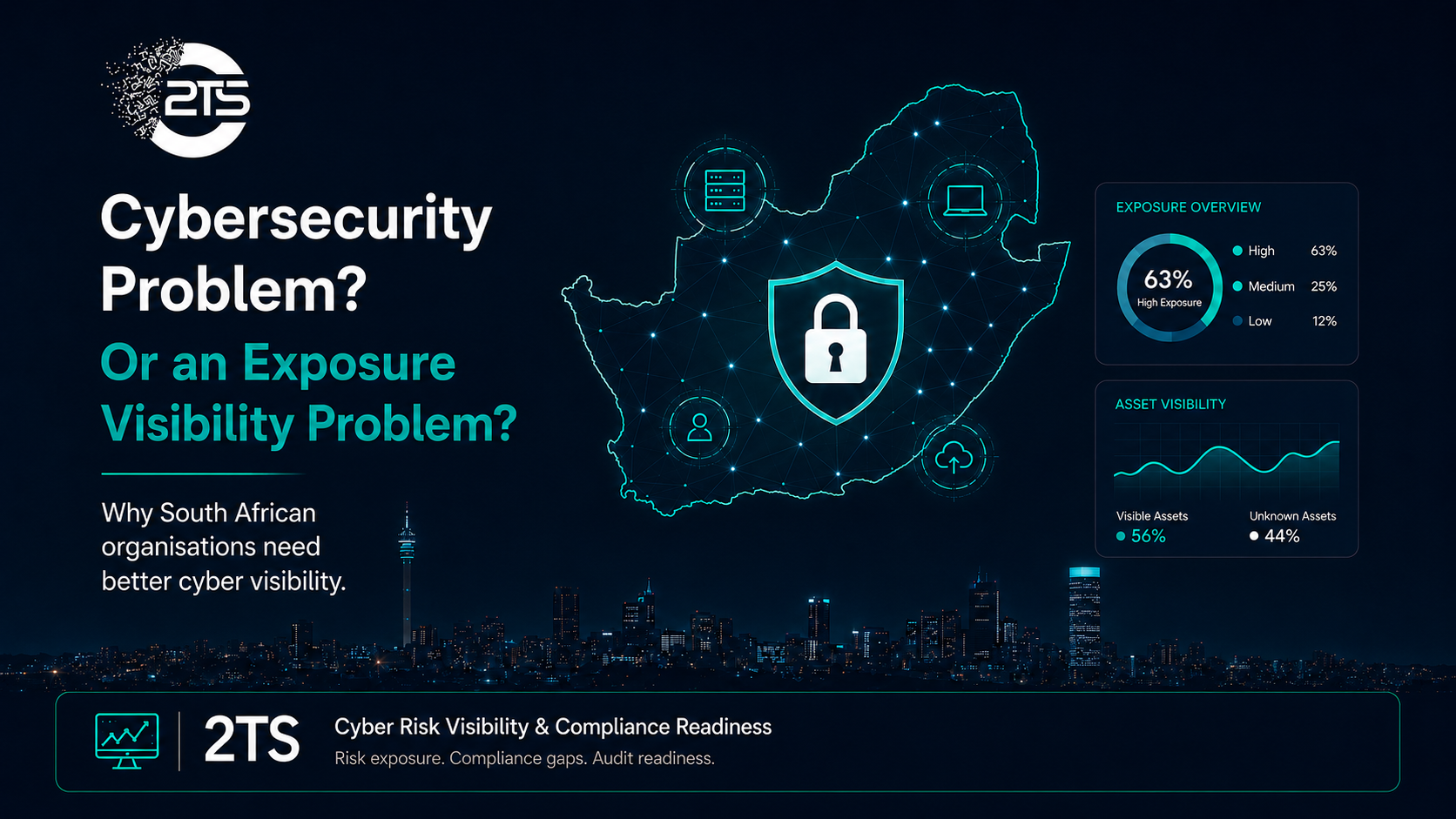 South African Organisations Don’t Just Have a Cybersecurity Problem. They Have an Exposure Visibility Problem04 Sep 2026
 -
 South Africa’s Digital Future Depends on Cyber Resilience05 Aug 2026
 -
 Hacktivist Attacks on SA Government Show Why Cyber Readiness Can’t Wait29 May 2026