 Skip to content

The New Cold War: Hackers Are Targeting Cold Storage Systems

Cybercriminals are finding new ways to disrupt businesses, and their latest targets are not computers or customer databases. They are industrial refrigerators and cold storage systems.
Recent reports have highlighted cyberattacks against internet-connected refrigeration systems across Europe, with incidents affecting supermarkets, food storage facilities and other organisations that depend on temperature-controlled environments.
In some cases, attackers have reportedly manipulated refrigeration controls, causing temperatures to rise and putting valuable stock at risk.
For South African businesses, this raises an important concern: cybersecurity threats are no longer limited to digital information. They can now directly affect physical equipment, inventory and daily operations.
When Cyberattacks Become Physical Problems
Modern refrigeration systems are increasingly connected to the internet, allowing businesses to monitor temperatures, manage equipment and control operations remotely.
While this improves efficiency, it also creates new opportunities for attackers.
According to recent international reports, cybercriminals have targeted vulnerable refrigeration controllers, allowing them to interfere with temperature settings and disrupt cooling systems.
For businesses that depend on cold storage, the consequences can be serious.
A compromised refrigeration system could result in spoiled food, damaged pharmaceutical products, equipment failures, financial losses and operational downtime.
What starts as a cybersecurity weakness can quickly become a costly physical problem.
Why Connected Equipment Creates New Risks
Many businesses invest in cybersecurity to protect their computers, networks and sensitive information.
However, operational equipment is often overlooked.
Industrial refrigeration controllers, temperature monitoring systems, warehouse equipment and connected machinery form part of what is known as Operational Technology (OT).
These systems manage physical processes that businesses depend on every day.
When OT equipment is connected to the internet without proper security measures, attackers may be able to exploit weak passwords, outdated software, exposed remote access or poorly configured networks.
The challenge is that many organisations do not have complete visibility over which operational devices are connected or whether they are properly protected.
What This Means for South African Businesses
South African businesses across several industries rely heavily on temperature-controlled environments.
Food manufacturers, cold storage facilities, distribution centres, supermarkets, pharmaceutical suppliers and logistics companies all depend on refrigeration systems to maintain product quality and business continuity.
A disruption to these systems can affect much more than the equipment itself.
Businesses could face product losses, delayed deliveries, interrupted operations, financial pressure and damaged customer relationships.
Even organisations that have strong traditional IT security may still be exposed if their operational technology is not properly monitored and protected.
This is why OT cybersecurity is becoming an increasingly important part of business risk management.
How 2TS Can Help
2TS helps South African organisations strengthen the security of their Operational Technology environments through specialised cybersecurity solutions.
Through technologies such as Nozomi Networks, 2TS helps businesses gain greater visibility over connected industrial equipment, identify potential vulnerabilities and monitor suspicious activity across OT networks.
For organisations operating critical infrastructure, 2TS also offers solutions such as Waterfall Security’s unidirectional gateways, which help protect operational systems by controlling how information moves between industrial environments and external networks.
These capabilities are particularly relevant for businesses that depend on refrigeration, manufacturing equipment and other connected operational systems.
By improving visibility, reducing unnecessary exposure and strengthening network protection, organisations can take a more proactive approach to securing the equipment their operations depend on.
The New Cold War Is a Business Wake-Up Call
The recent attacks on refrigeration systems show how cybersecurity threats are expanding beyond traditional computers and networks.
As more industrial equipment becomes connected, businesses need to understand that operational technology can also become a target.
Cybersecurity is no longer only about protecting data. It is about protecting the systems that keep businesses running.
For organisations that depend on cold storage and connected equipment, identifying vulnerabilities and securing operational environments should be an important part of their cybersecurity strategy.
Protect your operations before your weaknesses are tested.
Contact 2TS to learn how its Operational Technology security solutions can help strengthen the protection of your critical systems.
Visit: https://2ts.co.za/
Recent Posts
-
 PHP2Shell: Critical Security Flaws Put Websites and Businesses at Risk20 Nov 2026
- PHP2Shell: Critical Security Flaws Put Websites and Businesses at Risk18 Nov 2026
-
 South African Firms Face R17 Million Ransomware Recovery Costs as Attacks Worsen06 Oct 2026
-
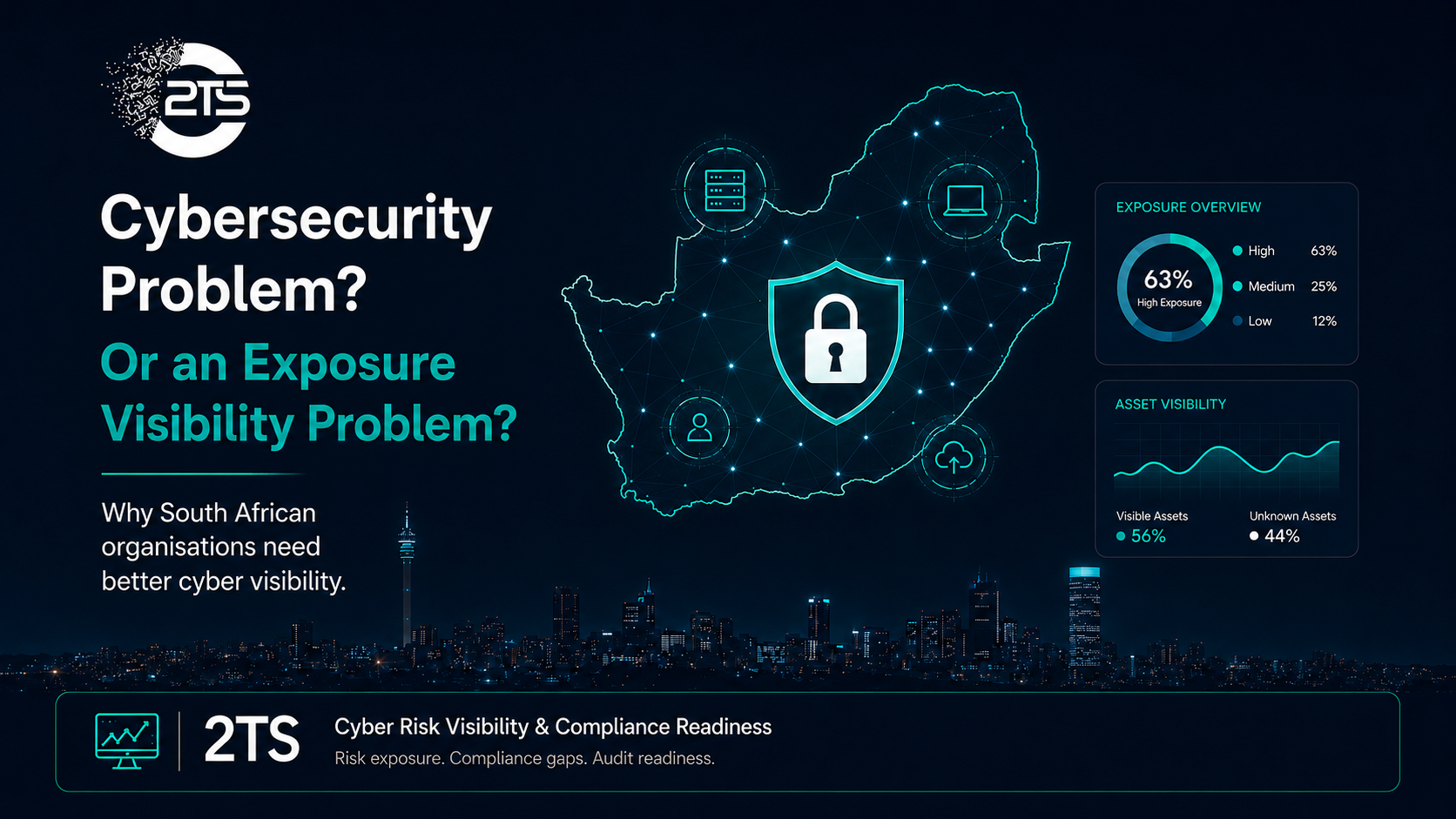 South African Organisations Don’t Just Have a Cybersecurity Problem. They Have an Exposure Visibility Problem04 Sep 2026