 Skip to content
South African Government Agency Hit by R1.7 Million Ransomware Attack
Michael Pretorius
May 19, 2026
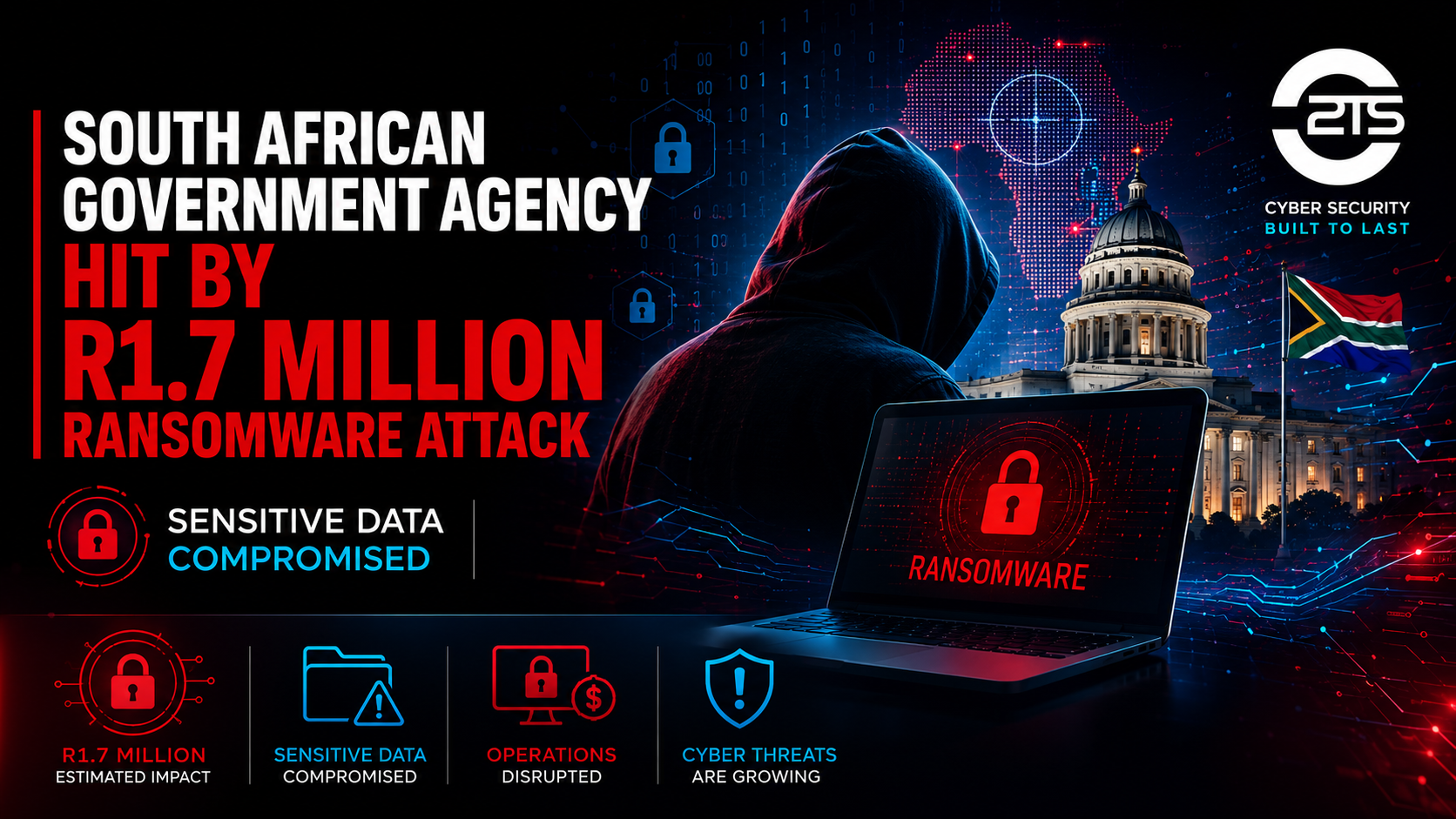
Sensitive Data Compromised in Latest Cybersecurity Incident
A South African government agency has reportedly fallen victim to a ransomware attack, resulting in the exposure of sensitive data and financial losses estimated at around R1.7 million.
The breach highlights the growing cybersecurity risks facing both public and private sector organisations across the country.
According to reports, attackers gained access to internal systems, encrypting critical data and disrupting operations. Ransomware attacks of this nature typically involve cybercriminals locking organisations out of their own systems and demanding payment in exchange for restoring access.
How the Attack Happened
While full technical details have not been publicly disclosed, incidents of this kind usually exploit:
- Weak access controls
- Outdated or unpatched systems
- Phishing emails targeting employees
- Poor visibility of network activity
Once inside a network, attackers often move laterally, escalating privileges before deploying ransomware across key systems.
By the time the attack is detected, significant damage has already been done.
The Real Cost of a Breach
The reported R1.7 million impact is only part of the story.
Cyberattacks carry both direct and indirect costs, including:
- Operational downtime
- Loss of sensitive or regulated data
- Reputational damage
- Regulatory consequences under laws such as POPIA
- Long-term recovery and system rebuild costs
For many organisations, the biggest risk is not the ransom itself. It is the disruption to business continuity and trust.
A Growing Trend in South Africa
This incident is not isolated. South Africa has seen a steady increase in ransomware and data breach cases over the past few years.
Government entities, financial institutions, and private businesses are all being targeted.
Cybercriminals are becoming more sophisticated, often focusing on organisations that lack strong detection and response capabilities.
The pattern is clear.
Attackers are not just targeting large organisations. They are targeting those that are easiest to breach.
Why Many Organisations Are Still Vulnerable
One of the biggest challenges is a false sense of security.
Many organisations believe they are protected because they have:
- Basic antivirus software
- Firewall systems
- Documented IT policies
However, when a real attack occurs, these measures often fall short.
The gap lies in execution.
Having policies is not the same as having active monitoring, tested response plans, and real-time visibility into threats.
The Importance of Being Audit-Ready
Incidents like this raise an important question for businesses:
If you were asked today to prove your cybersecurity readiness, could you do it quickly and confidently?
Most organisations cannot.
They would need days to gather evidence, assess systems, and understand their own risk exposure.
That delay is exactly what attackers rely on.
What Businesses Should Be Doing Now
In light of this breach, organisations should be taking immediate steps to strengthen their cybersecurity posture:
- Regularly update and patch all systems
- Implement strong access controls and user authentication
- Train staff to recognise phishing and social engineering attacks
- Monitor systems continuously for unusual activity
- Develop and test incident response plans
- Ensure backups are secure and recoverable
Cybersecurity is no longer a once-off exercise. It requires ongoing management and visibility.
How 2TS Helps Businesses Stay Protected
At 2TS, the focus is on helping businesses move from uncertainty to control.
We work with organisations to:
✔ Identify real cybersecurity risks across systems and processes
✔ Provide clear visibility into vulnerabilities and exposure
✔ Strengthen detection and response capabilities
✔ Prepare businesses for audits and compliance requirements
✔ Ensure that cybersecurity is measurable and actionable
The goal is simple.
When a threat appears or an auditor asks for proof, your business is ready.
Final Thoughts
The recent ransomware attack on a South African government agency is another reminder that cyber threats are not slowing down.
They are increasing in frequency, complexity, and impact.
Organisations that take a reactive approach will continue to face disruption and loss.
Those that invest in proper visibility, governance, and response capabilities will be in a far stronger position to protect their operations and data.
Need Help Assessing Your Cybersecurity Risk?
If you are unsure how exposed your business is, now is the time to find out.
Contact 2TS today to understand your current risk and take the next step toward stronger cybersecurity.
Recent Posts
-
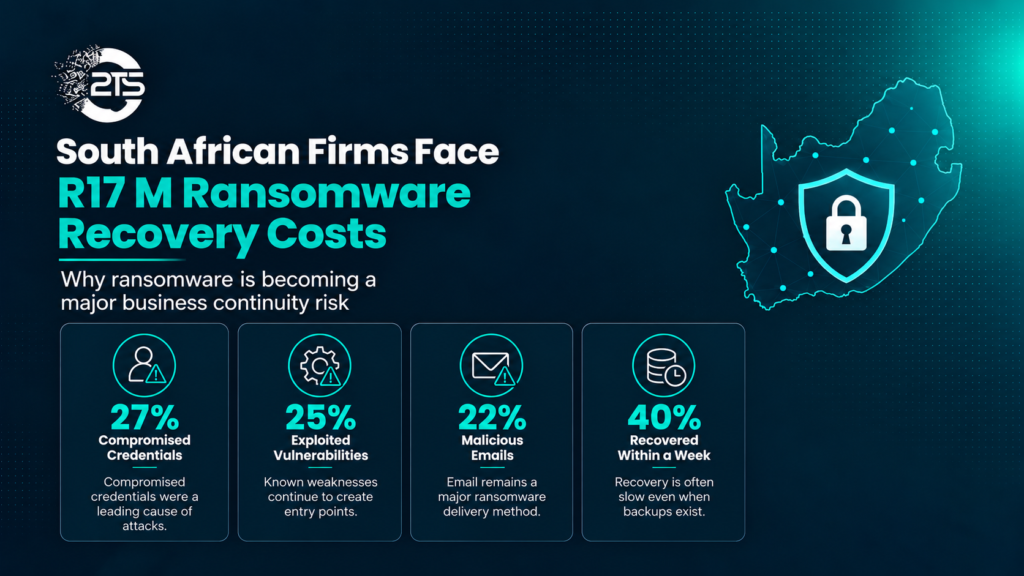 South African Firms Face R17 Million Ransomware Recovery Costs as Attacks Worsen06 Oct 2026
 -
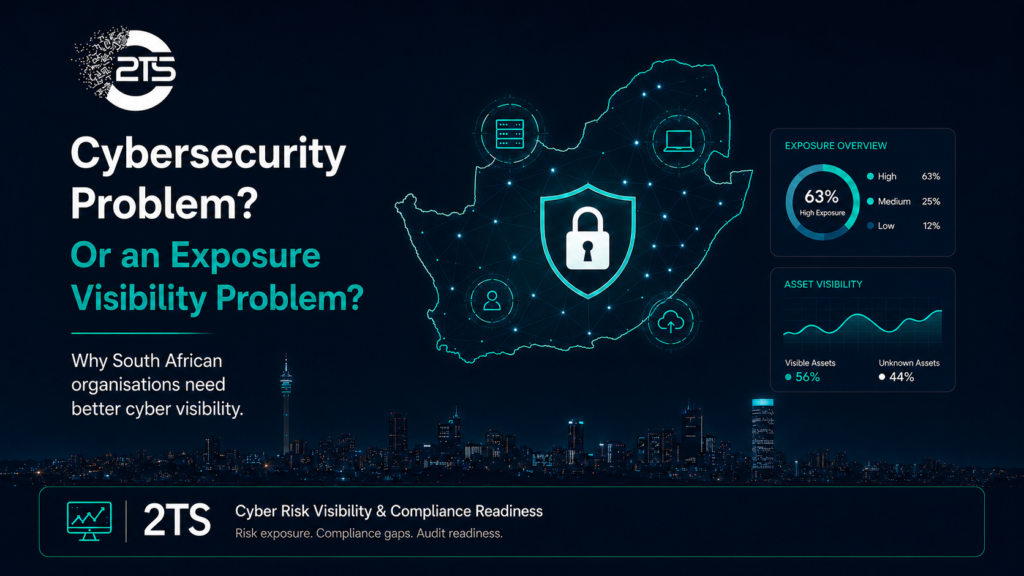 South African Organisations Don’t Just Have a Cybersecurity Problem. They Have an Exposure Visibility Problem04 Sep 2026
 -
 South Africa’s Digital Future Depends on Cyber Resilience05 Aug 2026
 -
 Hacktivist Attacks on SA Government Show Why Cyber Readiness Can’t Wait29 May 2026